
When the Emotions of May Hit You, Remember This
The hardest part of motherhood is letting go. But without it, we can’t mother at all. This month, with all the feels of letting go (graduations and Memorial Day) and mothering, I am pointing you to something I wrote a couple years ago.
One of the most-loved essays in my book Divine Detour is called, “The Presence of Absence.” It describes the hole left by something you once had that no longer is, like the impression left by a shell in a lump of clay. Like empty bedrooms, vacant dining chairs, and outgrown softball cleats.
I wrote an extension to that essay for an anthology released by my publisher, CrossRiver Media: Abba’s Lessons. Here is that essay, “Absence with a Purpose”:
ABSENCE WITH A PURPOSE
Letting go of children exposes a raw place in my soul, and an unyielding lump in my throat. I cried every time they started a new phase of life: preschool, kindergarten, high school, college, marriage. Something deep inside a parent dies a little every time a child crosses another threshold. And yet, deep down, we know it is how it is supposed to be. How it must be for them to make their own decisions and their own way in life. And we are proud to have played whatever small part we did in their development. We are thrilled for them. We throw parties and confetti, and we clap our hands as we wave goodbye. But they leave a hole of what was, and I am reminded of the strange mix that is saudade.
Saudade is a term that originated in Portugal. Like many rich words, it has no English equivalent. This word came to life in the 15th Century when Portuguese ships sailed to Africa and Asia in hopes of opening trade routes. The family fragment left behind shouldered a constant feeling that something big was missing from their lives, a yearning for the presence of the loved ones who had sailed. It has been called the “presence of absence.”
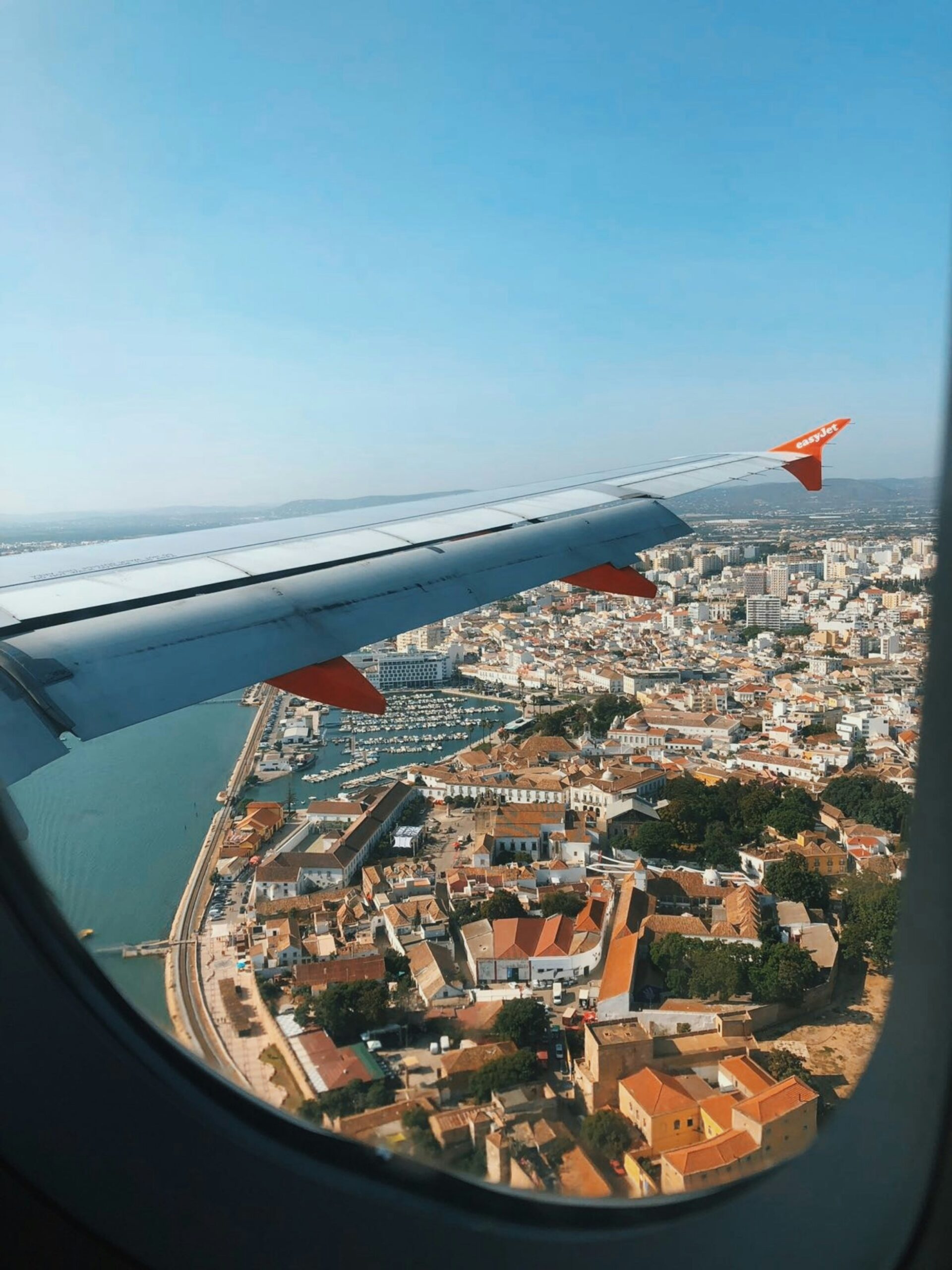
Sending my youngest child back to Europe after Christmas break to finish her year studying abroad, I got a big dose of saudade. I wrote a note to slip into her suitcase:
In France, instead of “I miss you,” people say, “You are missing from me.” That’s how it feels when you’re not here. Part of me is missing. Something special and important. I felt it when you went to kindergarten, to college, and now again as you go back overseas. But also, it feels like part of me is on an adventure, and I love that. Stay safe, brave girl. Call me soon and tell me how our adventure is going. I love you. Mom
IT’S ABOUT RELATIONSHIPS
As parents constantly releasing little bits of our children as they grow, we understand saudade. Saudade is, at its core, about relationships. The blissful glue that binds them together and the calamity of this broken life that tears them apart. It is about missing something that cannot be replaced with anything else, and feeling the gaping hole of its absence.
- If you are yearning for a lost soul to return to you someday, you know saudade.
- If you welcome the still-painful memories of someone who has died, you know saudade.
- If you’re an empty-nester waiting for future grandchildren, you know saudade.
- If you endure paralyzing loneliness in the second half of a full life, you know saudade.
- If you’re living with chronic illness, disease, or pain, you know saudade.
- If you suppress the constant feeling that something important is missing in your life, you know saudade.
- If you are alive at this moment, you may not know it, but you know saudade.
That strange presence of absence will eventually affect all of our relationships. But none with more pull than our relationship with God. Wise men such as Solomon and Pascal knew about saudade.
A HEART VACUUM
Solomon wrote in Ecclesiastes 3:11 that God “set eternity in the human heart…” Made in His image, our oneness with God was there in the beginning, but we have become separated. We were born with free will. And it had to be this way for us to truly love, to freely choose, God. Until we choose Him, He and His eternal nature are missing from us. And that heart vacuum constantly aches to be filled as we yearn for an eternity we can sense, an eternity we once knew.
Modern thinkers have now acknowledged Solomon’s wisdom. Psychologists confirm that human beings have a belief in eternal life hardwired into us, regardless of the amount (or complete lack of) religious exposure. We all have a longing, a knowing, for forever and the Eternal God. It just is.
We all have a longing, a knowing, for forever and the Eternal God. It just is.
We can choose to perfectly fill that hole once occupied with the Everlasting or we can search for something else to clumsily and cheaply pour into the spot. But all the little shards of this life that we dump in will never fill that infinite vacuum.
Pascal’s idea of a God-shaped vacuum in our hearts speaks to this. From his Pensees #425:
“What else does this craving, and this helplessness, proclaim but that there was once in man a true happiness, of which all that now remains is the empty print and trace? This he tries in vain to fill with everything around him, seeking in things that are not there the help he cannot find in those that are, though none can help, since this infinite abyss can be filled only with an infinite and immutable object; in other words by God himself.”
A PURPOSE TO THE VOID
Saudade is indeed, absence with a presence. But it is also absence with a pull, absence for a purpose. This God-shaped space in our hearts represents the most important saudade we must deal with in this life. How we satisfy that longing will define our destiny. But we are not left in the dark as we seek to fill that void.
The most gaping hole in history was the empty tomb. Christ’s tomb explains saudade. The emptiness first grieved His followers, then it saved the world. Absence with a purpose. Ironically, we all need that tomb, that hole, to understand the answer to our own heart’s void. Our heart vacuum can only be filled by the One who triumphed over the ultimate emptiness. So in a real sense, it took a hole to fill a hole.
Our heart vacuum can only be filled by the One who triumphed over the ultimate emptiness.
So in a real sense, it took a hole to fill a hole.
My daughter returned from Europe in one piece—more mature, more compassionate, and yes, even more independent. Just as God allows saudade in our lives for a reason, and just as the tomb was needed for the resurrection, it seems my daughter’s absence had a purpose, too.
Listen to this post read by the author HERE.
Lori-
this was so good!
Now I have a new vocabulary word- Saudade- which so adequately describes that feeling of loss.
Yay, Jan!! That’s exactly how I felt when I learned it. Makes so much sense, right?
This is so true and a wonderful insight, Lori. Thank you for sharing.
Always such a bright spot to hear from you, Brad! Thanks for being here!
Thank you Lori. This piece made my heart sing… Your insight is so uplifting… It confirms to me that there is truly “Honey in The Rock”. Thank you.
Thank you, Neil. It was certainly an “aha moment” for me when Holy Spirit helped me see this. Appreciate your comment very much!
This is beautiful and gave words to my heart’s longing. Thank you
Thanks for letting me know it resonated with you, Lizzy! Blessings to you!
Thank you Lori.
Thanks for being here, Dawn!
“Saudade” and the French phrase-“you are missing from me” rather than “I’m missing you” so aptly fits. Our daughter went no contact with me (even blocked me) with no reason given and not allowing me to try to amend what I did wrong and I keenly feel this. Thank you.
Thank you for sharing this, Grace. I know there are many, many parents in your situation. Praying for resolution and peace in your family.